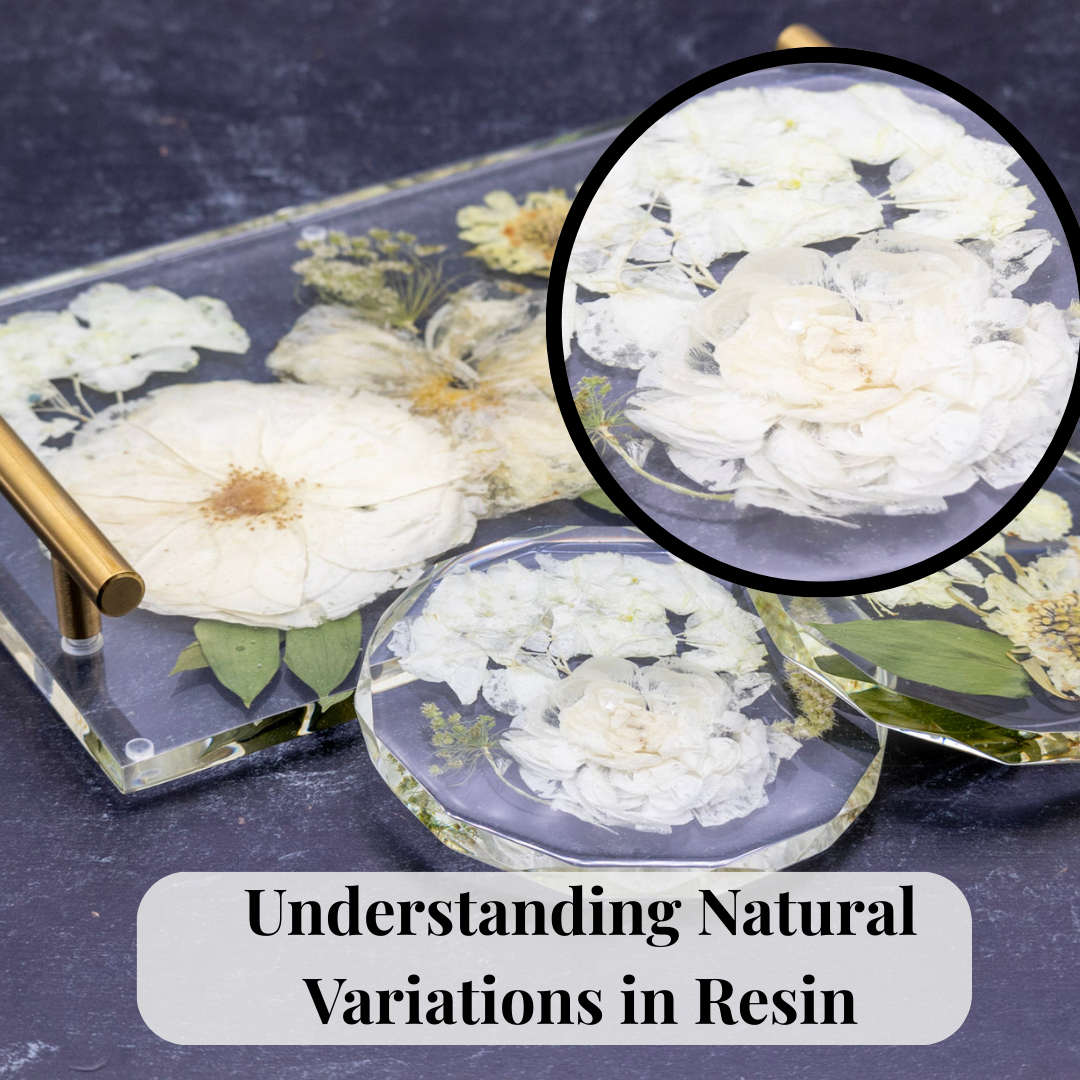
What is Spotting in Flower Preservation? Understanding Natural Variations in Resin
This blog explains “spotting”—the appearance of translucent spots in preserved flowers—as a natural, unpredictable part of resin preservation. Learn why spotting happens, which blooms are most susceptible, and how Wild Coast’s transparent approach ensures you understand and appreciate the unique beauty of your keepsake.
You've carefully selected your preservation piece, approved your design, and eagerly awaited your finished keepsake. Then it arrives, and you notice small transparent or translucent spots on some of your flowers. What happened? Is this a mistake?
At Wild Coast Flower Preservation, we believe in complete transparency about the flower preservation process – including the natural variations that can occur when working with organic materials. One of the most misunderstood phenomena is something we call "spotting," and today we're going to explain exactly what it is, why it happens, and what it means for your preserved bouquet.

What is Spotting?
Spotting occurs naturally when flowers encased in resin develop transparent or translucent spots where the flower tissue becomes see-through. These spots appear in areas where the flower's cellular structure has been damaged – often microscopically – during the natural drying process, careful handling, or due to organic tissue breakdown.
Here's the tricky part: this damage is completely invisible to the naked eye before resin application. It only becomes apparent once the flower is encapsulated in resin, as the resin penetrates the compromised tissue and reveals the underlying cellular changes.

Finished product, 12x8 Wall Hanging Frame with Chain, shows transparent spots on white orchids and calla lily.
Why Does Spotting Happen?
Understanding "spotting" requires a closer look at flower biology and preservation chemistry. When fresh flowers are preserved, several natural processes occur:
Cellular Structure Changes
Fresh flowers contain living cells filled with water and pigments. During the drying process, moisture is carefully removed using silica gel, which causes the cellular structure to change. Sometimes, individual cells or small groups of cells break down differently than surrounding tissue – creating microscopic weak points.
Natural Tissue Breakdown
Flowers are organic materials that naturally degrade over time. Even with expert preservation techniques, some flowers have areas of tissue that are more fragile than others. Petals with thin membranes, delicate blooms, or flowers that experienced stress before preservation are more susceptible.
Resin Penetration
When flowers are encased in our UV-resistant, food-safe epoxy resin, the resin naturally penetrates the flower tissue. In areas where the cellular structure has been compromised – even microscopically – the resin penetrates more deeply, creating a transparent or translucent appearance.
The Invisible Factor
The most challenging aspect of spotting is that it's completely unpredictable. Before resin application, flowers may look perfect to the human eye. The microscopic cellular damage only becomes visible once resin is applied and begins to cure.
Which Flowers Are Most Susceptible to Spotting?
While spotting can occur in any preserved flower, certain blooms are more prone to this natural variation:
Delicate, Thin-Petaled Flowers:
-
Orchids
-
Calla lilies
-
Monstera Leaves
-
Hydrangea
-
Anemones

Product photo of a 12x8 serving tray with white orchid and white tulip with transparency and spotting
Flowers with High Moisture Content:
-
Calla Lilies
-
Orchids
-
Garden roses
-
Lilies
- Waxy leaves
Stressed or Aged Flowers:
-
Flowers that wilted before preservation
-
Blooms exposed to extreme temperatures
-
Flowers that traveled long distances
-
Petals with bruising or handling marks
Why Even Expert Preservation Can't Prevent Spotting
At Wild Coast Flower Preservation, we've preserved over 18,000 wedding bouquets with meticulous care and attention to detail. Our team of 15 skilled artisans follows precise protocols for every single order. Yet spotting can still occur – and here's why:
It's Unpredictable
Spotting happens at the microscopic cellular level. Even with magnification and careful inspection, it's impossible to predict which flowers will develop spots once resin is applied.

It's Not a Quality Defect
Spotting is a natural result of flower biology meeting preservation chemistry. It doesn't indicate poor craftsmanship, careless handling, or substandard materials. It's simply part of working with organic materials.
Every Flower is Unique
Just like no two bouquets are identical, no two flowers respond to preservation in exactly the same way. Factors like growing conditions, flower variety, harvest timing, and pre-preservation handling all affect how individual blooms react to the preservation process.
What This Means for Your Preserved Bouquet
If your preserved flowers develop spotting, here's what you should know:
Minor Spotting is Natural
Small, occasional translucent spots are a natural characteristic of preserved flowers in resin. They're part of the organic nature of your keepsake and don't affect the structural integrity or longevity of your piece.
It Doesn't Mean Your Flowers Were Damaged
Spotting can occur even when flowers are handled with extreme care throughout the entire preservation process. It's not an indication that your bouquet was mishandled or improperly preserved.
Your Piece is Still Museum-Quality
Our UV-resistant, food-safe epoxy resin and expert craftsmanship ensure your preserved flowers will remain beautiful for generations – spots and all. These natural variations are part of what makes your piece unique and authentically yours.
Our Approach to Spotting at Wild Coast
We believe in complete transparency and setting realistic expectations. Here's how we handle spotting:
Proactive Education
We inform all our customers about the possibility of spotting before preservation begins. This natural variation is mentioned in our design approval communications, care instructions, and FAQ section.
Case-by-Case Evaluation
While minor spotting is a natural variation, we evaluate each situation individually:
-
Minor spotting: Small, occasional spots are considered natural variation
-
Extensive spotting: If spotting significantly affects the overall appearance of your piece, we'll work with you to find a solution. Often this results in a service like color correction or flower substitutions.
Clear Communication
If spotting occurs in your preserved flowers, we'll:
-
Acknowledge your concerns with empathy and understanding
-
Explain the science behind what happened
-
Provide visual examples to help you understand the phenomenon
-
Discuss options based on the severity and your specific situation

How to Minimize (But Not Eliminate) Spotting Risk
While spotting can't be completely prevented, these steps can help minimize the risk:
Ship Your Flowers Promptly
The fresher your flowers when they arrive at our studio, the better their cellular structure. Follow our detailed shipping guide and send your bouquet within 5 days of your wedding.
Keep Flowers Cool and Hydrated
Before shipping, store your bouquet in a cool location (not refrigerated) and keep stems in water. This maintains cellular integrity and reduces stress on the flowers. Do not freeze your bouquet.
Avoid Excessive Handling
The more your flowers are touched, moved, or manipulated, the higher the risk of microscopic cellular damage. Handle your bouquet gently and minimally before preservation.
Consider Flower Selection
If you're planning ahead and spotting is a concern, discuss flower choices with your florist. Hardier blooms like roses, dahlias, and succulents tend to be less susceptible than delicate varieties.
Add Color Correction if Needed
While color correction doesn't prevent spotting, it can help minimize the visual impact of translucent areas by restoring depth and opacity to affected petals. Learn more about our color correction service.

Product photo showing color correction on white florals inside a 9" Hexagon Block, set of 7" Bookends, and Round Ornament.
Real Talk: Managing Expectations
We've preserved thousands of bouquets, and we've learned that honest communication is the foundation of customer satisfaction. Here's what we want every bride to know:
Perfection Doesn't Exist in Nature
Your wedding bouquet was beautiful because it was natural, organic, and alive. When we preserve those flowers, we're capturing a moment in time – including all the natural variations that come with organic materials.
Spotting Doesn't Diminish Your Memories
Those small translucent spots don't change the meaning behind your preserved bouquet. They don't erase the moment you walked down the aisle, the vows you exchanged, or the love you celebrated.
Unique is Beautiful
No two preserved bouquets are exactly alike – and that's what makes yours special. The natural variations, including occasional spotting, make your piece authentically yours.
Frequently Asked Questions About Spotting
Can spotting be fixed after resin application?
Unfortunately, once flowers are encased in resin, spotting cannot be reversed. The resin has already penetrated the compromised tissue. This is why spotting is unpredictable and challenging to address.
Will spotting get worse over time?
No. Once your flowers are fully cured in resin, spotting will not progress or worsen. Our UV-resistant resin protects your flowers from further degradation.
Does spotting mean my flowers will fall apart?
Absolutely not. Spotting is a cosmetic variation, not a structural issue. Your preserved flowers are securely encased in durable resin and will remain intact for generations.
Can I request a remake if my flowers have spotting?
We evaluate each situation individually based on the severity of spotting and its impact on your piece's overall appearance. Minor spotting is considered a natural variation, while extensive spotting may warrant further discussion.
How common is spotting?
Spotting occurs occasionally and unpredictably. The frequency varies based on flower type, condition, and individual cellular structure. It's one of many natural variations that can occur when preserving organic materials.
Why We're Sharing This Information
At Wild Coast Flower Preservation, we believe educated customers are happy customers. We're sharing this detailed information about spotting because:
-
Transparency builds trust: We want you to understand every aspect of the preservation process
-
Realistic expectations prevent disappointment: Knowing about natural variations helps you appreciate your unique piece
-
Education empowers decisions: Understanding spotting helps you make informed choices about preservation options
-
Honesty is our policy: We'd rather over-communicate than under-deliver
The Beauty of Imperfection
In Japanese aesthetics, there's a concept called "wabi-sabi" – finding beauty in imperfection and impermanence. Your preserved wedding flowers embody this philosophy perfectly.
Those natural variations – whether it's slight color shifts, occasional spotting, or organic texture changes – are what make your piece authentically yours. They're evidence that your bouquet was real, alive, and part of one of the most important days of your life.
Perfect symmetry and flawless uniformity belong to artificial flowers. Your preserved bouquet tells a different story – one of natural beauty, organic authenticity, and genuine memories captured in time.
Our Commitment to You
With over 18,000 bouquets preserved and a team of 15 skilled artisans, we bring expertise, care, and attention to every single order. While we can't prevent all natural variations like spotting, we can promise:
-
Museum-quality craftsmanship on every piece
-
UV-resistant, food-safe materials that protect your flowers for generations
-
Clear, honest communication throughout the process
-
Individual evaluation of any concerns you have
-
A keepsake that honors your wedding day memories
Ready to Preserve Your Wedding Flowers?
Now that you understand spotting and other natural variations in flower preservation, you're equipped to make an informed decision about preserving your wedding bouquet.
We're here to answer any questions and guide you through the process:
-
Visit wildcoastflowerpreservation.com to explore our preservation options
-
Call us at (954) 296-5937 with questions about the preservation process
-
Email info@wildcoastflowerpreservation.com to discuss your specific flowers
-
Visit our showroom in Pompano Beach, FL (Monday-Saturday) to see preserved examples in person

Your wedding flowers deserve to be preserved with honesty, expertise, and care. Let us help you create a keepsake that celebrates both the beauty and the authentic nature of your special day.
At Wild Coast Flower Preservation, we believe in transparency, education, and celebrating the natural beauty of preserved flowers – spots and all.
Written by Michelle Besu