Home Preservation vs Studio Preservation: What Couples Should Know Before Sending Their Bouquet
Summary: Not all flower preservation is created equal. The biggest difference isn’t “resin vs framing.” It’s where and how your flowers are preserved. This guide breaks down home-based preservation vs professional studio preservation so you can choose the option that feels best for you.
Why this matters
When you ship your wedding bouquet, you’re shipping something irreplaceable. Two businesses can both say “flower preservation,” but the experience and the final result can be wildly different depending on whether the work is done in a home setting or a professional studio.

We started at home too (for the first 1.5 years)
Before Wild Coast had a studio, we were a home-based preservation business. For the first year and a half, we did the same thing many artists do: we learned, experimented, improved our process, and served customers from a home workspace.
What “home preservation” usually looks like
Home-based preservation typically means 1–2 people handle your order from start to finish. That can be appealing because it feels personal and direct.
It’s also often the beginning of a business journey. Many preservation businesses start at home because it’s the most accessible way to learn the craft, build a portfolio, and serve a local customer base.
At Wild Coast, we know this firsthand. We operated from a home studio early on, and we learned quickly that it comes with real limitations. As demand grows, you run into challenges like:
· Hiring and training staff when your workspace is also your home
· Your home life and your work life blending in ways that can create stress and inconsistency
· Space constraints for drying, pressing, resin work, finishing, and storage
· Even practical issues like the city sending citations when too many boxes are delivered or too much trash is generated for a residential property
None of that means home preservation is “bad.” It just means the setup has built-in constraints, especially as order volume increases.
Common challenges with home-based preservation
· No dedicated dust-free zone: Resin attracts dust and hair. Without a controlled space, tiny particles can end up in the finish.
· No designated resin room: Resin work is sensitive to temperature, humidity, and airflow. A multi-use room makes consistency harder.
· Not climate-controlled: Heat and humidity swings can impact curing, clarity, and overall finish.
· Limited mitigation tools: When resin issues happen (bubbles, cure problems, surface imperfections), a small setup may not have the tools or techniques to correct them.
· No finishing team: High-end resin work often requires a separate finishing process (sanding, buffing, polishing). In a one-person workflow, finishing can be rushed or inconsistent.
· No dedicated pressing area: Pressing flowers well requires space, organization, and repeatable systems.
· Multitasking overload: When one or two people do everything, timelines can slip quickly during busy seasons.
· Home environment variables: Pets, babies, and everyday home life can introduce allergens and contamination risk (pet hair, dander, litter dust). If you have allergies, this is worth considering.
· Business continuity risk: Some home businesses can pause orders, close intake, or shut down when overwhelmed.
What can be good about home-based preservation
Home preservation can be a great fit in the right situation, especially if the artist is established and has strong systems.
Potential benefits include:
· Personal, intentional communication: When the same person handles everything, updates can feel very direct.
· Local convenience: Many home artists serve a local customer base, which can reduce shipping complexity.
· Avoiding added shipping costs: Overnight shipping flowers can add real cost, sometimes $100–$200 depending on box size and location.
· A highly recommended artist: If someone you trust had a great experience, that matters.
A good rule of thumb: do your homework. Look through their social channels for recent work, consistency, and how they handle questions and expectations.
What “professional studio preservation” looks like
A professional studio is built for repeatable quality and long-term durability. Instead of one person doing everything, you typically have a team with specialized roles, controlled workspaces, and quality control systems.
Why shipping to a studio can be smoother
· Commercial deliveries are often cheaper than residential deliveries.
· Business deliveries are often prioritized earlier in the day, which can mean your flowers arrive sooner and spend less time sitting on a truck.
· A staffed studio address reduces risk: packages are received by a team, not left on a porch.
What a studio setup can protect you from
· Pet hair and home allergens: Many couples feel better shipping to a business address with controlled spaces.
· Inconsistent temperatures and humidity: Studios can maintain separate, temperature-controlled areas for different steps.
· No resin-dedicated environment: A designated resin room and dust management matter more than most people think.

Studio preservation at Wild Coast: what’s different
At Wild Coast Flower Preservation, we made the hard choice to invest in a dedicated studio because we wanted to protect our process, our team, and our customers’ flowers.
We built our workflow for one goal: museum-quality resin work that lasts.
Here’s what that looks like in practice:
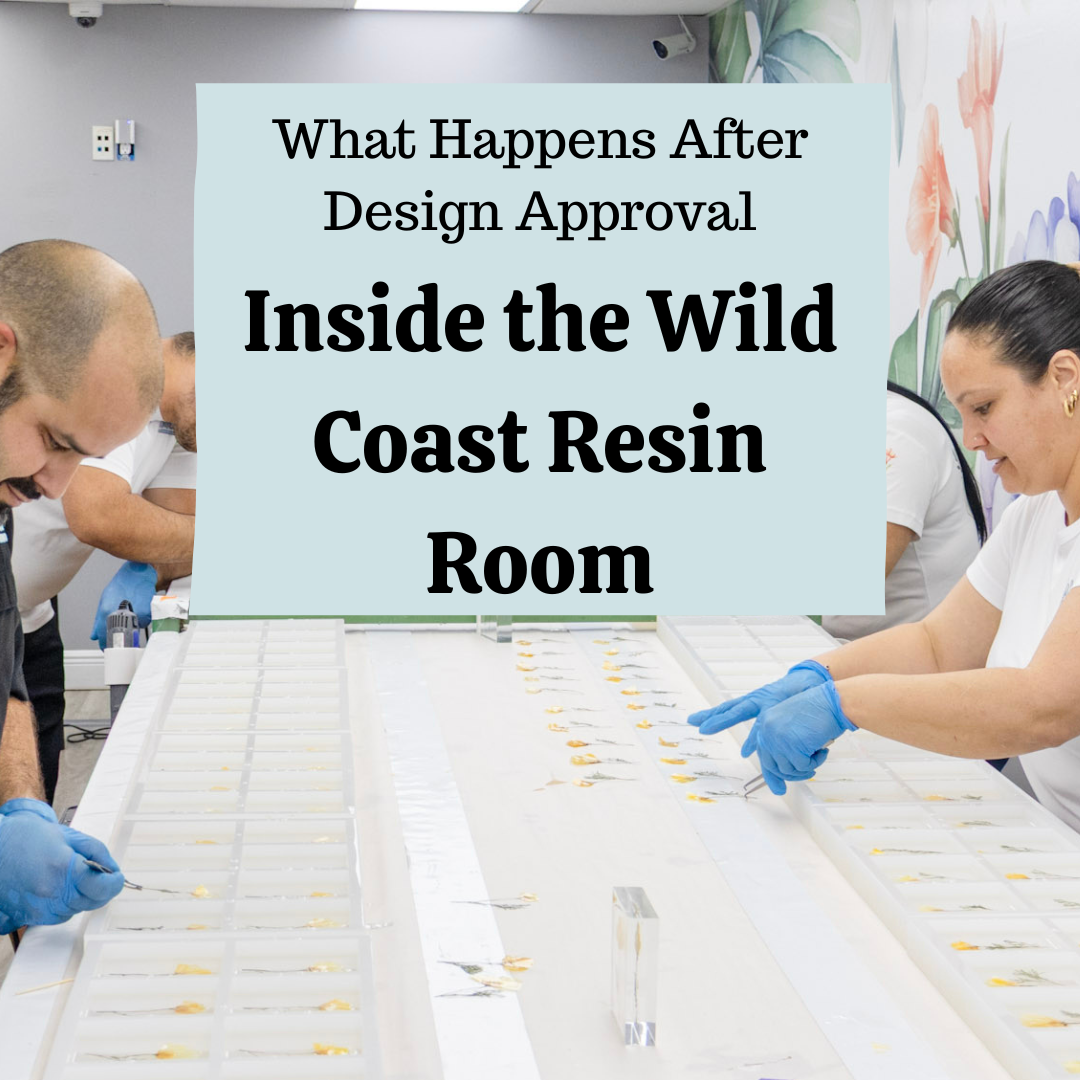
· Separate temperature-controlled spaces for different stages of preservation
· Dedicated work zones (including resin-specific work areas)
· Quality control techniques developed over thousands of orders
· A larger team so no single person is forced to multitask every step under pressure
· Tools and heavy equipment that improve consistency and keep our team safe
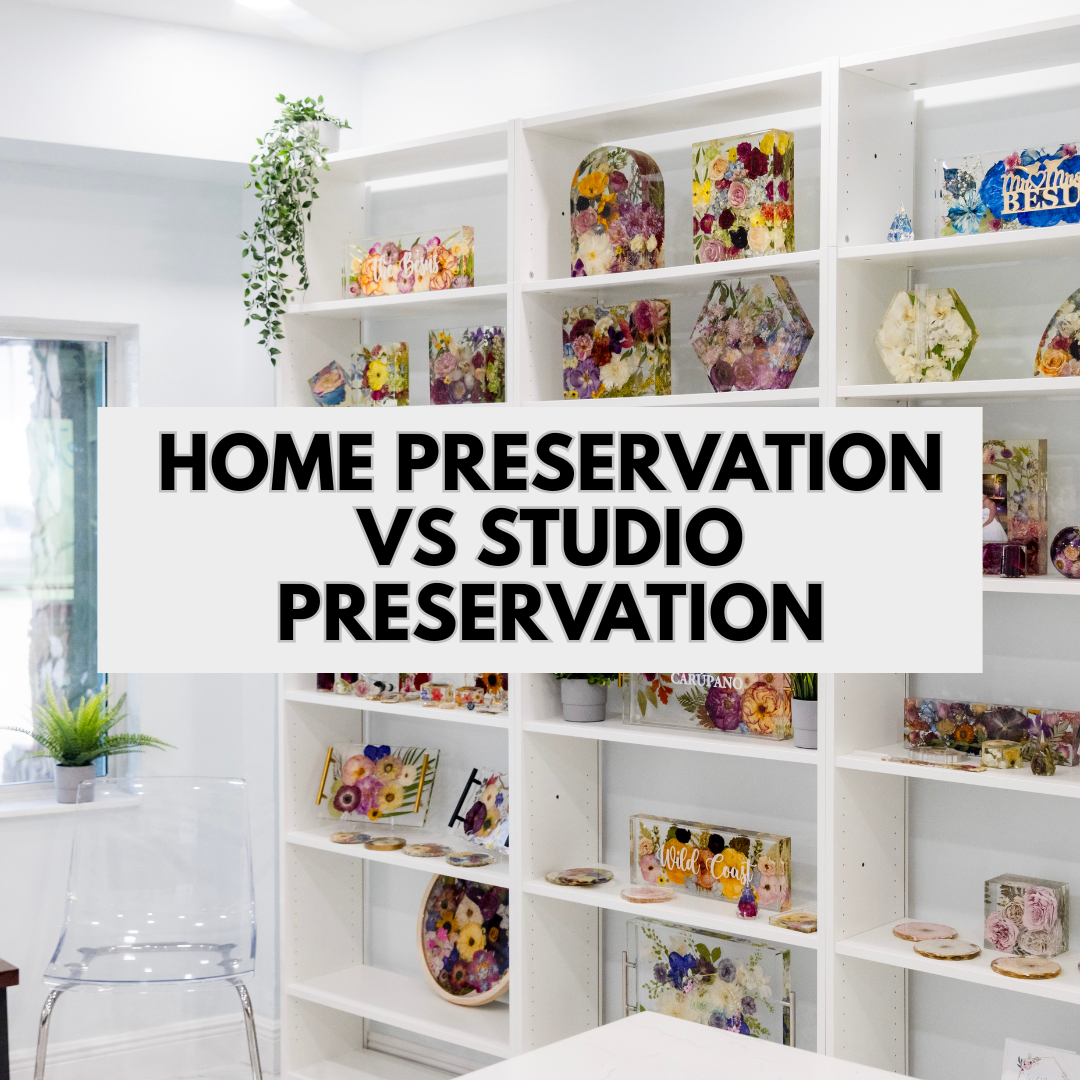
· A showroom and business address that many customers find easier to access, easier to reach by phone, and more reassuring for drop-offs and deliveries
Timeline reality check
Studio work is detailed work. Our timeline is about 5 months from the day your flowers arrive.
But we hear from couples all the time who waited a year or more elsewhere, or who felt stuck when a small business became overwhelmed.
If you’re choosing between a shorter promised timeline and a process built for durability, it’s worth asking: What systems are in place to keep that timeline realistic during peak season?
The resin difference: why materials matter
This is one of the biggest differences between home-based work and studio-level work.
Many preservation brands use resin that looks clear at first but begins to yellow quickly. Some resin artists call this “ambering,” and it can happen within months when low-quality resin is used.
At Wild Coast, resin is our specialty. We invest in high-quality, UV-resistant resin and we continually test it. We share performance feedback with our chemist, who adjusts the formula to improve clarity and UV resistance.
The goal is simple: your heirloom should last for years, not months.

Studio-level upgrades you may not get elsewhere
A studio can offer more options because it has more systems, tools, and specialized skill sets.
At Wild Coast, that includes upgrades like:
· Inlaid text and personalization
· Inlaid objects (including certain wood elements)
· Bouquet replacement if flowers are lost or unavailable
· Same-night pickup in South Florida
· Refinishing and repairs if you ever need help restoring a piece
Key questions to ask any preservation artist (home or studio)
These qualifying questions will help you determine if the artist is the right fit for you:
1. Are you currently available to take my order?
2. What is your average timeline, and what causes delays?
3. What resin do you use, and how do you reduce yellowing over time?
4. Do you have pets in your workspace?
5. Do you offer color correction?
6. Do I get to see my design before it’s finalized?
7. How many revision rounds do you allow?
8. If something happens to my flowers in transit, what is your plan?
9. Do you offer repairs or refinishing in the future?
Final takeaway
Home-based preservation can be personal and convenient, and some established home artists do beautiful work.
But if you want a preservation partner with controlled spaces, quality control systems, a specialized team, and resin materials built for long-term clarity, a professional studio is usually the safer choice.
If you want help choosing the right keepsake, timeline, or shipping plan, reach out. We’ll walk you through it and help you protect your bouquet from day one.

Written by Michelle Besu