Inside the Wild Coast Resin Room: What Happens After Design Approval
Summary: After you approve your design, your flowers move into our resin room, the stage where your layout becomes permanent. Here's what happens next, how we build your piece in layers, and the little details we obsess over to keep everything clear, clean, and consistent.

Once your design is approved, your order moves into one of the most satisfying parts of the process: the resin department.
This is where your flowers go from planned to permanent.
Resin work is equal parts art and patience. We're protecting delicate petals, keeping everything crystal clear, and making sure the finished piece matches what you approved.

Here's a behind-the-scenes look at what happens inside the Wild Coast Resin Room.
Step 1: Your order moves into the resin department (after design approval)
We only begin resin work once your layout is approved. That approval is the green light that tells our resin team:
· The flower placement is finalized
· The layout matches the approved design
· We can start building your piece in layers
It's one of the biggest reasons our process stays consistent because we are not moving forward until you've said, yes, I like this design.

Step 2: We stage your order, mold by mold
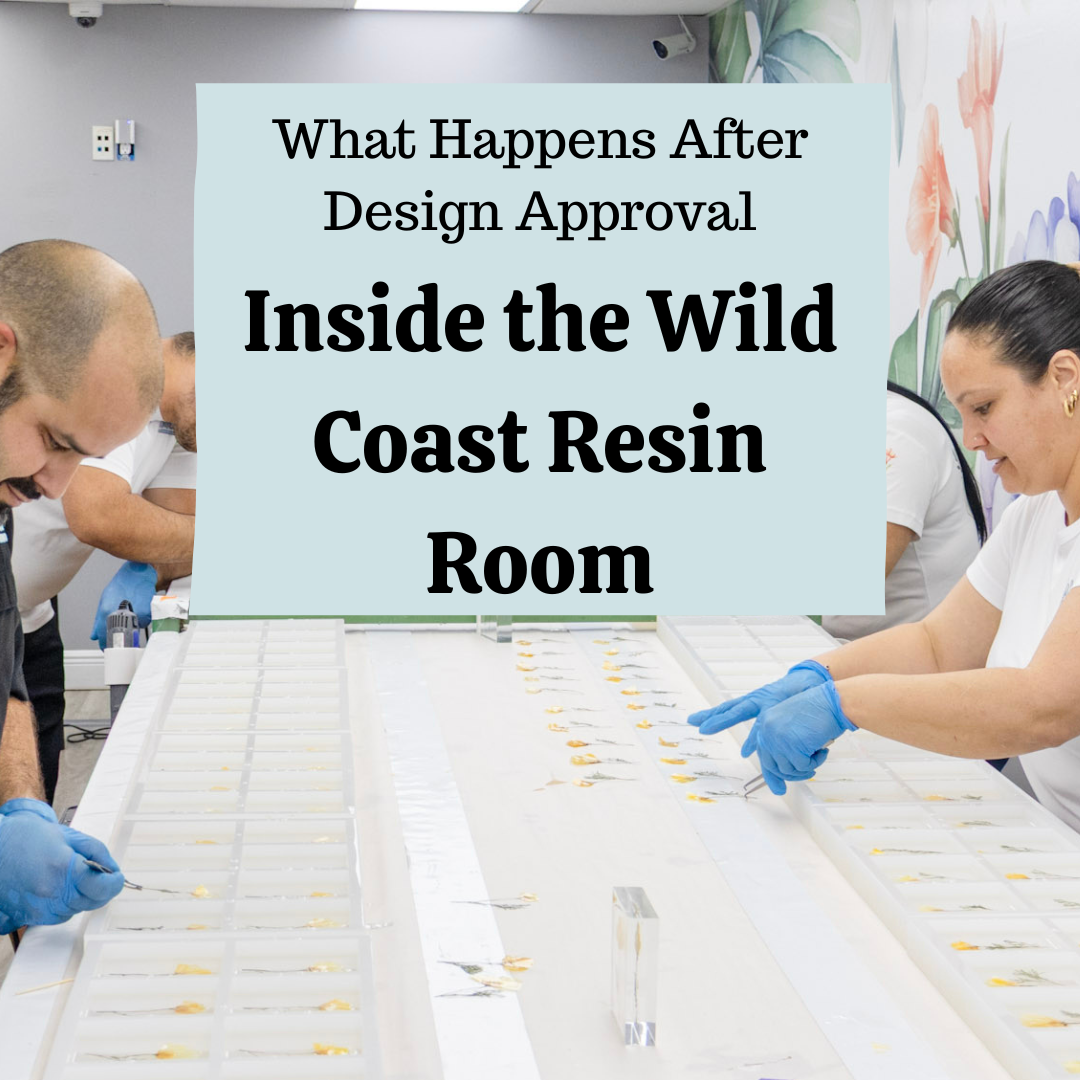
Before we pour anything, we set up the day's orders.
· We sort orders by where they are in the resin timeline
· We lay out each mold for each order
· We label everything clearly (customer name included)
· We match each staged mold to the approved design, so nothing gets crossed
It sounds simple, but staging is a huge part of accuracy when we are working on multiple orders at once.

Fun Fact: We pour 100+ orders weekly in the Wild Coast Flower Preservation resin room.
Step 3: We build directly from your approved design
When it's time to pour resin, a team member pulls up your approved designs on a tablet.
As we work, we:
· Reference the approved design while placing flowers (often we place your flowers face down)
· Match the layout to what you approved
· Pour resin carefully to protect the flowers and keep the piece clean and clear
This is one of our favorite parts of the process because you can literally see the transformation happen, and the artwork begins to come to life.

Step 4: The next day, we focus on keeping the piece thin, even, and polished
After the first layer cures, we come back in and do a few important things that most people never see.
We trim excess flower material
Some flowers have extra thickness on the back side. Once that first layer is set, we carefully trim any excess flower material so the final piece stays:
· Cleaner
· Thinner
· More even
We rotate the mold
Resin is a liquid, and even tiny variations in level can cause it to settle slightly toward one side.
So before the next layer, we rotate the mold 180 degrees. Its a small step that helps the piece cure more evenly.
Then we pour the next layer
After trimming and rotating, we pour another layer of resin to continue building the piece.

Step 5: The following day, we pour the final layer
Once the earlier layers are cured and everything looks exactly how it should, we pour the final layer.
This is what completes the build and gives your piece that smooth, finished look.

Step 6: Then we demold and inspect
After the resin has had time to fully set, we remove the piece from the mold.
This is also when we do a close inspection especially looking for larger air bubbles that may have formed during curing.
Step 7: If needed, we use our drill-and-fill technique (for larger air bubbles)
If we find a larger air bubble, we don't ignore it. We use a detail-focused drill-and-fill technique to address it directly.
That process allows us to:
· Reach the bubble precisely
· Fill it in a way that blends into the surrounding resin
· Refine it until it's at a point where you can't notice it
It's one of those behind-the-scenes steps that makes a big difference in how clean and intentional the final piece looks.

Why this process matters
Resin work is all about patience and precision.
Building in layers, staging orders carefully, rotating molds for even curing, and inspecting every piece before it moves forward are all part of one goal: To create a keepsake that looks beautiful today and still looks beautiful years from now.

Want to preserve your flowers?
If you're planning ahead for a wedding, or you have meaningful flowers you don't want to lose, the best next step is reserving your spot early.
If you have questions about timelines, styles, or what's possible with your bouquet, reach out; were happy to help you plan the best way to preserve your flowers.

Written by Michelle Besu