What 20,000 Bouquets Have Taught Me About Running Wild Coast Flower Preservation
Before I started Wild Coast Flower Preservation, I worked in corporate conference and event management.
At the time, I obviously wasn't thinking, This is great training for the flower preservation company I'm going to start one day.
But looking back, it was.
Events teach you very quickly that the plan is only the plan until something changes. A speaker is late. A room isn't set correctly. Something that worked perfectly yesterday suddenly doesn't work five minutes before hundreds of people walk through the door.
You learn to look at what is happening, figure out what matters most and make a decision.
I started Wild Coast in 2020, and that ability to make decisions without having every possible answer has probably been one of the most useful skills I've carried with me.
Today, we've preserved more than 20,000 bouquets.

And somewhere between bouquet number one and bouquet number 20,000, I've learned quite a bit about flowers, resin, customers and running a business where almost everything we touch is irreplaceable.
You Can't Wait Until You Know Everything
Flower preservation is a very unusual business.
Our customers aren't sending us something we can replace if things don't go according to plan. They're trusting us with their wedding bouquet, memorial flowers or another piece of a moment they can't recreate.
And unlike a typical online order, the process takes months.
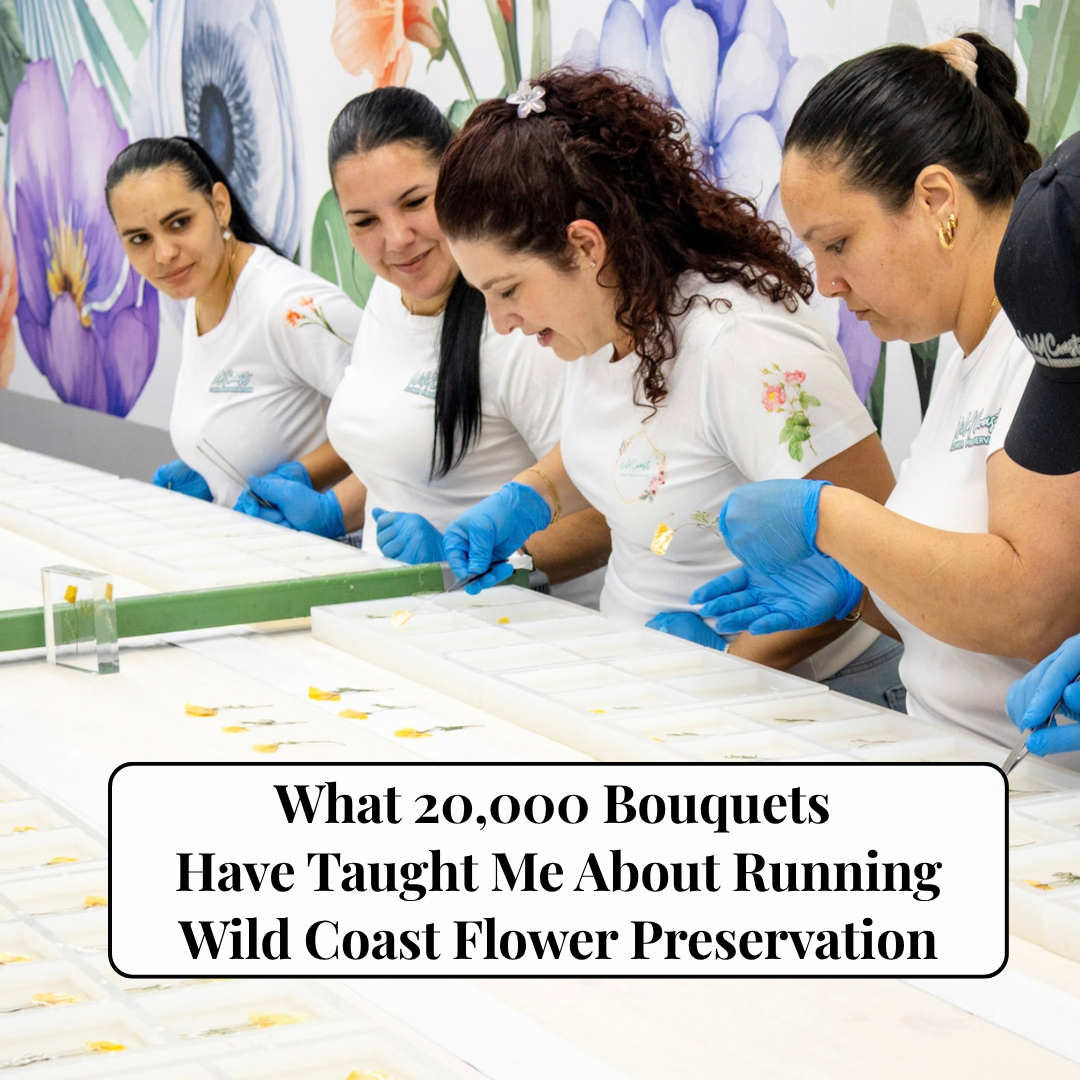
During that time, a bouquet moves through multiple stages and multiple hands in our studio. It has to be documented, taken apart, dried, designed, approved, cast in resin, cured, sanded, finished, inspected and eventually shipped home.
If you've ever wondered what is actually happening to your flowers during all that time, we created Your Bouquet's Journey to show the process from the day a bouquet arrives through the day the finished pieces leave our studio.

There are hundreds of decisions behind that process.
Some are small. Some affect the entire studio. And some have changed the way we work permanently.
I've learned that waiting until you have perfect information usually isn't an option. You make the best decision you can with what you know, watch what happens and adjust when you learn something new.
The important part is being willing to make that adjustment.
 Read the full interview with CEO, Michelle Besu, on Bold Journey.
Sometimes Customer Feedback Changes Our Process
One of the best examples of this is color correction.
Flowers don't always look the same after they're dried and preserved. Certain varieties can darken, fade or become translucent when they're cast in resin.
Orchids and some tropical flowers can be particularly tricky.
We have always tried to educate customers about the natural changes that happen during preservation, and we offer color correction for customers who want us to restore some of the color that was lost during drying.
But over time, we realized something.
Simply offering color correction wasn't enough.
A bride isn't a flower preservation expert. She may have no idea that the white orchids in her bouquet have a higher chance of becoming translucent in resin. Giving her an optional service doesn't help much if she doesn't know why she might need it.
So we changed the process and created a Color Correction Gallery of examples.
Now, when we see flowers where translucency or a significant color change could affect the finished piece, we address it before casting.
We explain what we're seeing. We show the customer examples. We talk about the options. And when we believe color correction will produce a result closer to what she's expecting, we say so.

I'll admit that this can be an uncomfortable conversation.
Color correction costs extra, and the last thing we want is for someone to feel like we're trying to upsell her halfway through the process.
But we've learned that avoiding the conversation isn't better customer service.
I'd rather tell someone, Here's what we're seeing and here's what could happen, while there is still time for her to make a choice.
That change came directly from listening to customers, including the feedback that isn't always fun to hear.
Changing Your Mind Isn't Always a Bad Thing
Owning a business has changed the way I think about being wrong.
Earlier in my career, I probably viewed changing a decision as evidence that the first decision wasn't good enough.
I don't see it that way anymore.
Sometimes changing your mind just means you have more information now than you had six months ago.
We've changed products. We've changed procedures. We've changed how we communicate with customers. We've added services because customers needed them and stopped doing things that weren't working as well as we hoped.
The business we have today couldn't operate exactly like the Wild Coast I started in 2020.
And I think that's a good thing.

The Question Has Changed From “Will This Work?” to “Will This Still Work Later?”
As Wild Coast grew, the questions I asked myself started changing.
In the beginning, so much of running the business was simply:
Can I make this work?
Now I think much further ahead.
If we introduce a new process, can we still do it when we're twice as busy?
Does it make the customer's experience better?
Does it make sense for our team?
Can we deliver it consistently?
What happens six months from now?
That's been especially important as we've expanded what customers can do with a single bouquet.
Our Preservation Packages are a good example.
We noticed customers were frequently combining the same types of keepsakes, so instead of making every bride figure out those combinations from scratch, we built packages around the ways people were already ordering.

The idea wasn't simply to create another product.
It was to solve a problem we kept seeing: How do I decide what to make with my bouquet?
A bride might arrive on our website knowing she wants her flowers preserved but have no idea whether she wants a block, tray, ring holder, ornament, coasters or some combination of them.
The packages give her a starting point while still leaving room to make the preservation her own.
You can also browse our bouquet block collection or look through the Wild Coast gallery to see what other customers have created.
Some Parts of This Work Simply Can't Be Rushed
One lesson I've had to learn over and over again is that efficiency and speed aren't always the same thing.
There are plenty of places where we've worked to make Wild Coast faster and more efficient.
But the flowers don't care about our production schedule.
They need time to dry.
Resin needs time to cure.
Our pieces go through multiple rounds of sanding and finishing.
Trying to save time in the wrong part of the process will eventually show up in the finished piece.

That's why one of the most important things we've learned is to identify which parts of our process cannot be rushed and protect them.
Then we look for efficiencies everywhere else.
If you're curious about this part of the process, you can go inside the Wild Coast resin room to see what happens after a customer approves her design.
Trust Is a Bigger Part of Flower Preservation Than I Ever Expected
When someone places a normal online order, she pays for something and receives it a few days later.
Our customers do something very different.
They put their wedding flowers in a box and send them to us.
Sometimes those flowers have been in their hands less than 24 hours since they walked down the aisle.
Then they wait months while we transform them.

That requires an enormous amount of trust.
It's one of the reasons we've continued adding more education and communication to our process. We want customers to understand what's happening to their flowers, what natural changes they should expect and what choices they have along the way.
We're also creating more before-and-after examples and resources around individual flower types because a rose doesn't preserve exactly like an orchid, and an orchid doesn't behave exactly like a hydrangea.
The more a customer understands before we begin, the better decisions we can make together.
For anyone thinking about preservation, our Whole Flower Preservation page is a good place to start.
One Bouquet Can Have a Much Longer Life Than You Think
This is still one of my favorite parts of what we do.
A wedding bouquet has an incredibly short original life.
A bride carries it for a few hours. It appears in hundreds of photos. Maybe it sits in a vase at the end of the night.
And then the wedding is over.
Preservation gives us a chance to change what happens next.

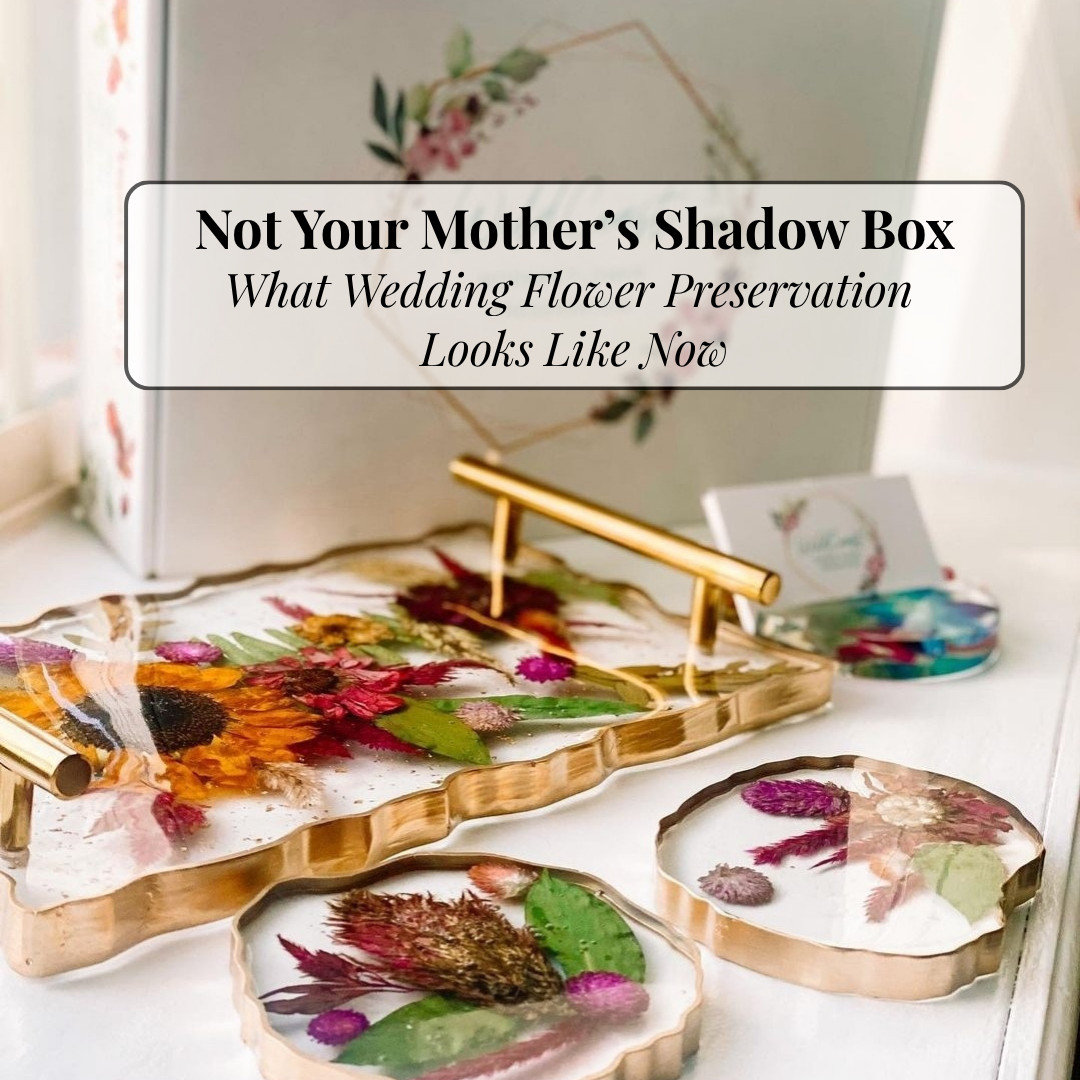
Those flowers can become a serving tray that comes out when friends are over. They can become coasters on a coffee table, an ornament that's unpacked every Christmas, or a resin block displayed in the couple's home.
We can also preserve more than flowers. Invitations, ribbons, photographs, handwritten notes and other meaningful pieces from the day can be incorporated into a design. We shared some examples of this in Inlaid Keepsakes: Adding Personal Mementos to Your Preserved Flower Art.
That's what I mean when I talk about giving flowers a second life.
I don't necessarily want your wedding bouquet to become something you carefully put away.
I want it to become part of your home.
Building a Business That Will Still Be Here Years From Now
There is one question behind a lot of the decisions I make today that I didn't think nearly as much about when Wild Coast began:
Will this help us build a company that is still here years from now?
That matters to me.
We're working with sentimental pieces, and many of our projects stay with us for months. Customers need to be able to trust not only the person designing their flowers but the company behind that person.
My hope is that the brides sending us their bouquets today will know exactly where to find us years from now—maybe when there's another wedding in the family, an anniversary, or another set of flowers they aren't ready to let go of.
We've come a very long way since 2020, but I still feel like we're figuring out what Wild Coast can become.
There are new keepsakes we haven't designed yet, preservation problems we haven't solved yet, and probably a few strange things someone will eventually email us and ask, Can you put this in resin?
And knowing us, we'll probably try.

Want to Preserve Your Flowers?
If you're thinking about preserving a wedding bouquet, memorial flowers or another meaningful arrangement, you can explore our gallery, learn more about whole flower preservation, or contact the Wild Coast team and tell us what you're hoping to create.
We're based in Pompano Beach and work with customers throughout the country. If you're local, you can also learn more about flower preservation in Miami and South Florida.

Written by Michelle Besu