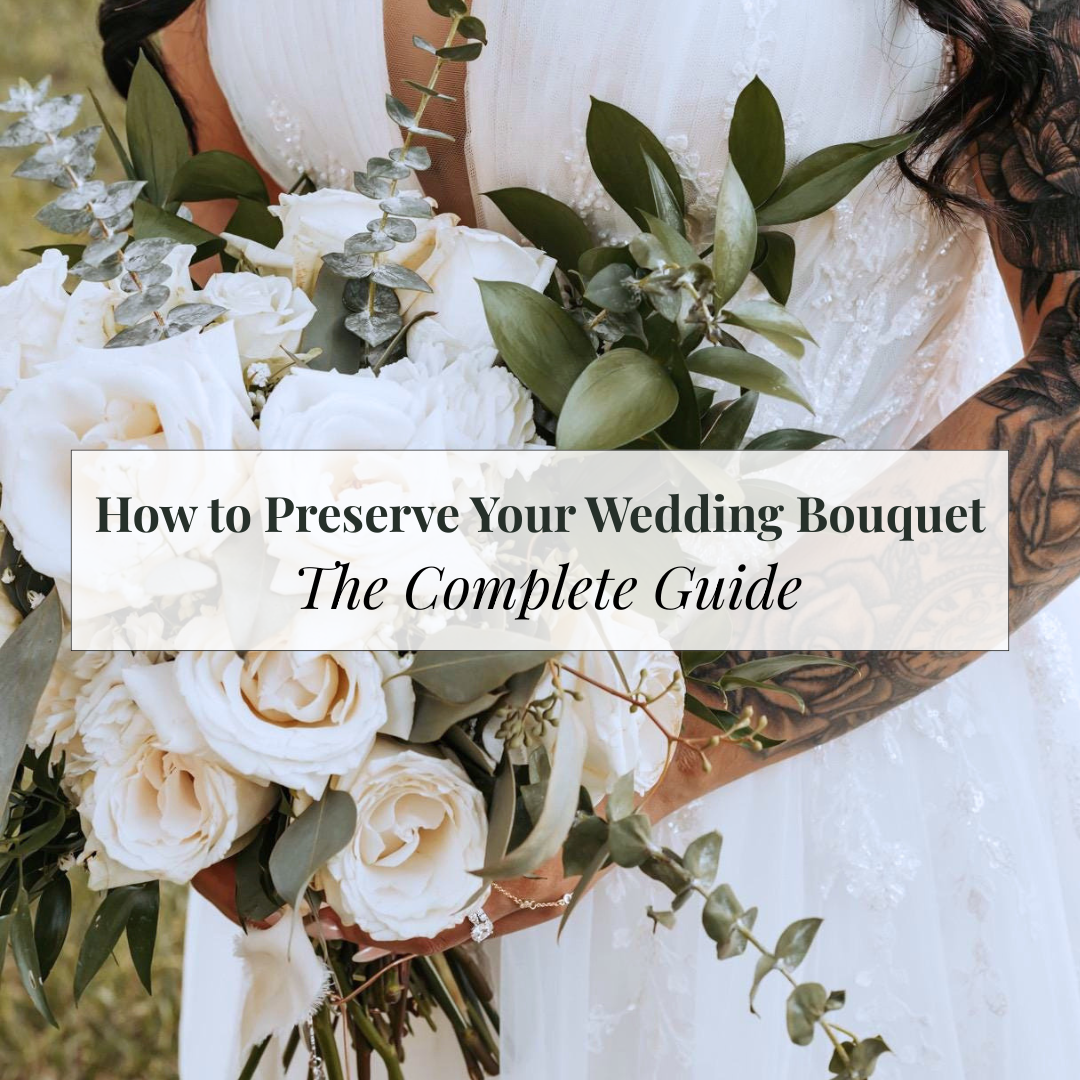
How to Preserve Your Wedding Bouquet: The Complete Guide
Preserving your wedding bouquet is about turning fresh flowers into a lasting keepsake you can display and actually use for decades. This complete guide walks you through every preservation method, the real timeline, what to do the week of your wedding, how shipping works, what affects color, and how to choose the right company. You’ll also find a simple “start here” plan and a hub of internal links to help you go deeper on topics like color correction, spotting in resin, dried bouquets, and our design process.

Quick Start: What to Do (Before and After Your Wedding)
If you only read one section, read this.
· 2–6 months before the wedding: Reserve your preservation date and decide what you want to create (tray, frame, blocks, coasters, jewelry, etc.).
· Week of the wedding: Confirm your plan for getting flowers to the studio (ship, drop-off, or pickup). Keep flowers cool and hydrated.
· Within 1–5 days after the wedding: Send or drop off flowers. Fresher flowers preserve with the best clarity and color.
· After your flowers arrive: Drying happens first, then design, then resin work, then finishing.
If you’re ready to book now, start here: Wedding Bouquet Preservation
What “Bouquet Preservation” Actually Means
Wedding bouquet preservation is the process of stopping flowers from breaking down and transforming them into a permanent keepsake. The end result can be:
· Functional home decor (serving trays, coasters, bookends, wall decor)
· Display pieces (blocks, frames, statement pieces)
· Wearable keepsakes (jewelry)
The method you choose affects everything: how three-dimensional your flowers look, how much color changes, how long it takes, and how durable the finished piece is.

The Main Methods of Preserving a Wedding Bouquet
There isn’t one “best” method. There’s the best method for your bouquet, your style, your budget, and your expectations.

1) Whole flower preservation (3D)
Best for: dimension, statement pieces, heirloom impact
Whole flower preservation keeps blooms three-dimensional. Flowers are dried (often in silica gel), then arranged and sealed into a durable finished format.
Common finished formats:
· Whole flower blocks and bookends
· Ring holders and thicker keepsakes
· Statement pieces designed to show depth
Learn more: Whole Flower Preservation
2) Pressed flower preservation (flat)
Best for: a clean, modern look, delicate detail, and bouquets that press beautifully
Pressed flower preservation flattens flowers and preserves them in a thin format. Pressed flowers can be displayed behind glass or used inside resin pieces.
Common finished formats:
· Pressed flower trays and coasters
· Wall decor and frames
· Jewelry
Learn more: Pressed Flower Preservation
3) Freeze-drying (specialized)
Best for: select flower types and specific color goals
Freeze-drying is a specialized method that removes moisture at very low temperatures. Some studios use it as a standalone method (often displayed in shadow boxes). Others use it selectively within a broader process.
Important note: freeze-dried flowers can be fragile and still require careful finishing and protection.
4) Air-drying (DIY-friendly, but limited)
Best for: sentimental DIY keepsakes, not museum-quality results
Air-drying is the most common at-home method. It can work for certain blooms, but it typically produces more color shift and brittleness.
If you’re considering dried flowers from a past wedding, this matters a lot. Read: Air-Dried vs Silica-Dried Flowers
DIY vs Professional Preservation (What People Don’t Realize)
DIY can be meaningful, especially if you love crafting and you’re okay with experimentation. Professional preservation is usually the better fit if you want:
· A piece that stays clear and beautiful long-term
· A predictable process and timeline
· Design guidance and quality checks
· A wider range of functional products
If you’re on the fence, read: How to Preserve Your Wedding Bouquet: Everything You Need to Know

Timing: When to Start Planning (And Why It Matters)
The biggest factor in preservation quality is how fresh your flowers are when preservation begins.
Ideal timing
· Best results: flowers arrive within 1–5 days of the wedding
· Still possible: partially dried bouquets, with realistic expectations
Why freshness matters
Flowers start breaking down immediately after the wedding. As they age, they become more prone to:
· Petal bruising
· Browning
· Transparency in resin
· More noticeable color change
If you’re planning ahead, you have more options, more availability, and less stress.

What to Do With Your Bouquet Right After the Wedding
Here’s the simple version.
· Keep flowers in water as much as possible
· Store them in a cool room (avoid heat and direct sun)
· Do not leave them in a hot car
· Avoid crushing petals (tight vases can bruise blooms)
If you’re shipping, plan for Monday–Thursday shipping whenever possible so your bouquet doesn’t sit over a weekend.

Shipping Your Bouquet (Without Panic)
Shipping is one of the biggest stress points for brides, but it doesn’t have to be.
Your main options
· Ship your flowers (nationwide)
· Drop off in person (if local)
· Bouquet pickup (South Florida)
If you want a simple, predictable option, we offer a flat-rate label: Prepaid Overnight Shipping Label
Local option: Bouquet Pickup Service

Color Changes: What’s Normal, What’s Fixable
All preserved flowers change somewhat. That’s normal. The goal is to preserve them beautifully and intentionally.
What affects color
· Flower type (some whites and pinks are more sensitive)
· Freshness at arrival
· Drying method
· Exposure to heat and sunlight before preservation
Color correction
If you want the most accurate color match possible, color correction can help.
Read the full guide: Color Correction for Flower Preservation
And the deeper blog: Color Correction for Preserved Flowers

Spotting and Transparency in Resin (Expectation Setting)
One of the most misunderstood parts of resin preservation is spotting or transparency. It’s not “mold” or a mistake. It’s usually a result of natural tissue changes in the flower.
If you want the honest explanation (and what it means for your piece), read: What Is Spotting in Flower Preservation?
The Wild Coast Process (From Arrival to Delivery)
Every studio is different. Here’s the high-level flow at Wild Coast.

Step 1: Order + reservation
Start with your reservation and product selection.
· Start here: https://wildcoastflowerpreservation.com/pages/wedding-preservation
· If you have questions: https://wildcoastflowerpreservation.com/pages/faqs
Step 2: Flowers arrive + drying
Drying typically takes weeks. This is where preservation really begins.
Read: What Happens When Your Flowers Arrive
Step 3: Design stage + approval
After drying, our designers open your order, review your notes and bouquet photos, and build a design for each item.
Read: Inside the Wild Coast Design Process
Step 4: Resin work
Once your design is approved, we move into resin production.
Read: Inside the Wild Coast Resin Room
Step 5: Finishing
Finishing is where pieces become display-ready.
Read: Inside Our Sanding + Buffing Department
What You Can Make (Ideas That Actually Get Used)
If you’re trying to decide what to make, start with how you want to live with your flowers.
For daily use
· Coasters
Browse:
· Serving trays: https://wildcoastflowerpreservation.com/collections/serving-trays
· Coasters: https://wildcoastflowerpreservation.com/collections/coasters-1
· Jewelry and accessories: https://wildcoastflowerpreservation.com/collections/jewelry-accessories-1
For statement display
· Wall decor and frames
· Large blocks and bookends
Browse wall decor: https://wildcoastflowerpreservation.com/collections/hanging-wall-decor-1

If Your Bouquet Is Already Dried (Or From Years Ago)
You still may have options. Dried bouquets can work especially well in thicker pieces where depth helps accommodate fragile petals.
Start with this: Air-Dried vs Silica-Dried Flowers

How to Choose a Preservation Company (A Real Checklist)
Use this checklist before you book anywhere.
· Before-and-after photos: not just finished product shots
· Clear process and communication: design approvals, updates, expectations
· Product range: confirm they can make what you want
· Materials: ask about UV resistance and long-term clarity
· Workspace: professional studio conditions matter
If you want to see what we offer, explore:
· Shop all: https://wildcoastflowerpreservation.com/collections/all-products
· FAQs: https://wildcoastflowerpreservation.com/pages/faqs

FAQs (Quick Answers)
How long does bouquet preservation take?
At Wild Coast, most projects take about 5 months from the day your flowers arrive at our studio, depending on your items and any add-ons.
Can you preserve flowers that are not fresh?
Often yes, especially for thicker 3D pieces. Results vary based on condition.
Will my flowers look exactly the same?
They will look like your flowers, but some color and texture change is normal. Color correction can help in many cases.
Can I include personal items?
Yes. If you want to incorporate invitations, vows, charms, or other mementos, start here: Frequently Asked Questions About Bouquet Preservation
Ready to Preserve Your Bouquet?
If you want a keepsake you’ll actually use and display, we’d love to create it with you.
· Start here: https://wildcoastflowerpreservation.com/pages/wedding-preservation
· Browse products: https://wildcoastflowerpreservation.com/collections/all-products
· Questions or special requests: https://wildcoastflowerpreservation.com/pages/contact
A little bouquet goes a long way.

Written by Michelle Besu